
Keynotes
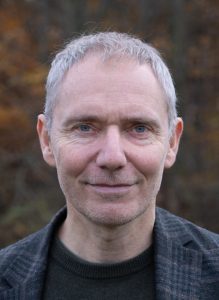
Nikolaj Elf
Advancing Bildung in School? The case of nature, science and technology in SHAPE
Addressing grand socio-ecological challenges, such as climate change, requires the ability to understand and engage with nature, science and technology. However, their integration into education remains challenging and may rest in the way we understand and associate Bildung with school subjects.
Reflecting this challenge, this keynote takes as a point of departure the ongoing large-scale research project Advancing Bildung in School: Science and Technology in SHAPE (ABIS). SHAPE refers to ‘Social sciences, Humanities and the Arts for People and Economy’, and the ABIS project focuses on three SHAPE-subjects: L1, History and Social science.
The purpose is to explore, historically and in contemporary school practice, whether it is possible to advance the notion of Bildung in school practice. Specifically, we investigate the LIFE Foundation intervention initiative ‘STEM-in-SHAPE’ that develops learning resources from primary to upper-secondary education in a Danish context attempting to integrate nature, science and technogy in SHAPE subjects. Also, we investigate historically how Bildung has been integrated into school subjects from early 1900s up to now.
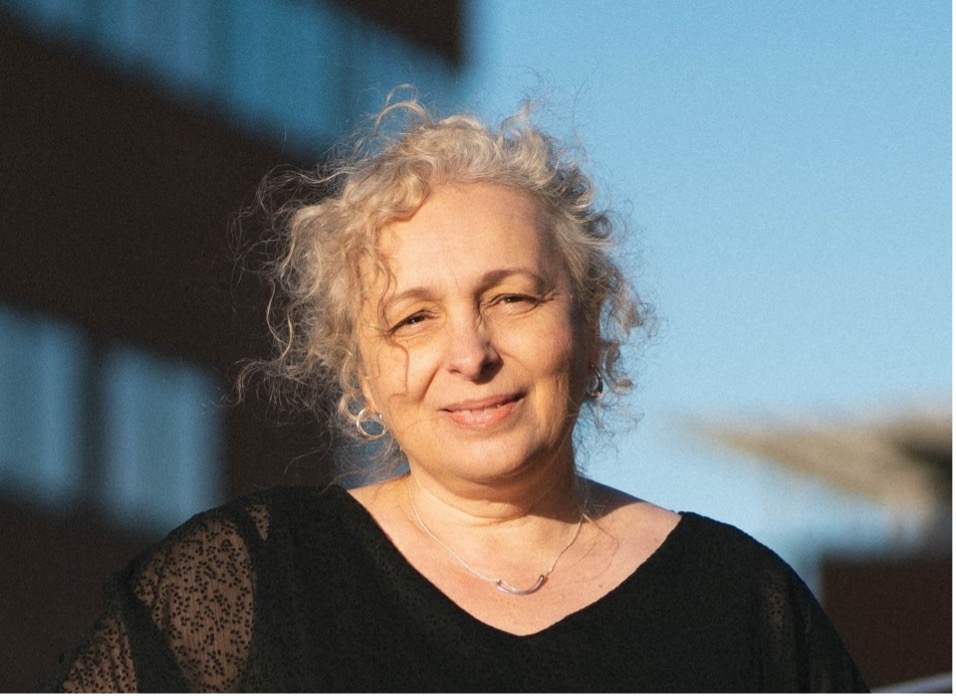
Susana S. Fernández
Teaching Complex Ideas in Simple Words: Intercultural Semantics and the Minimal Languages Approach in Language Education and Beyond
Contemporary societies are increasingly characterized by mobility, linguistic diversity, and complex multilingual repertoires. In this context, language education faces the challenge of creating learning environments that are both linguistically accessible and socially inclusive. Drawing on recent research and development work within the project Danish in the Making, this presentation explores how experiences from Danish L2 education in migration contexts may inform L3 subjects such as German and Spanish, as well as content subjects seeking more linguistically inclusive pedagogies.
The presentation focuses on two interconnected areas: intercultural semantics and pragmatics, and the Minimal Languages Approach. The former highlights the importance of developing learners’ awareness of culturally embedded meanings, communicative norms and pragmatic expectations across languages and communities. The latter offers a communicative framework based on a restricted core vocabulary of approximately 200-300 high-frequency words that can be combined strategically to achieve clarity, accessibility, and meaningful communication, even at early stages of language development.
I conclude by discussing how communicative accessibility, intercultural competence, and multilingual awareness can serve as common principles across educational contexts, offering new pedagogical perspectives for increasingly diverse societies.
Malin Löfstedt
When Worldviews Collide: Religious Literacy, Dialogue and Democracy
Malin Löfstedt is Associate Professor at the Department of Theology at Uppsala University. Her research focuses on the didactics of religion (religionsdidaktik), controversial issues in Religious Education, methods for developing religious literacy, and young people and religion.
In a multicultural and democratic society, Religious Education (RE) faces complex challenges. In this keynote, Löfstedt discusses how RE can contribute to responding to these challenges by fostering students’ religious literacy. This involves not only knowledge about religion, but also the ability to engage in constructive and critical conversations about religion and religious issues. Such religious literacy also requires self-reflection—the ability to critically examine one’s own assumptions and perspectives—as well as empathy and the ability to understand the experiences of others. The keynote thus highlights both the challenges and opportunities involved in teaching about religion in a multicultural and democratic society.
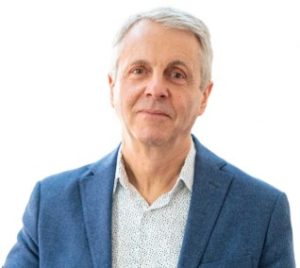
Nigel Musk
Translation as a strategy and practice in the English language classroom
Nigel Musk is a Senior Associate Professor in English at Linköping University. His research interests concern language teaching and learning as well as bilingualism/multilingualism. What these research areas share is a conversation analytic and interaction analytic perspective, but also an educational setting.
With the move towards a communicative approach to foreign and second language teaching, coupled with a target-language-only policy in the language classroom, translation has tended to fall out of favour. Yet “[t]ranslation is intrinsically inherent in foreign language learning” (Witte et al., 2009, p. 4). Indeed, analyses of video-recorded English language classroom interactions between teacher and pupils and between pupils collected since 2011 to the present day have revealed that translation is commonly used by teachers and Swedish secondary school pupils for various different purposes. The analyses draw on multimodal conversation analysis to demonstrate both how translation arises as a strategy and practice. Primarily, first (or additional) language Swedish is used as one method to elicit the production or recall of unavailable vocabulary items in English. In pupil-pupil interaction they invariably check with each other first, but if neither pupil can produce the relevant vocabulary item in English, they resort to online translation tools, in turn requiring additional strategies.
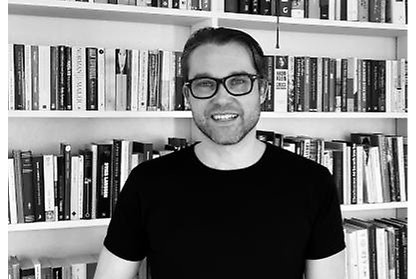
Olle Nordberg
Literature Teaching and Democracy – Empirical Perspectives on a Theoretical Debate
Olle Nordberg is Associate Professor at the Department of Literature and Rhetoric, Uppsala University, and Visiting Senior Lecturer at the Department of Education. His research focuses on literature teaching (litteraturdidaktik), empirical reading research, reading attitudes, literary competence and identity, and the educational significance of literary reading.
In this keynote, Nordberg addresses the longstanding debate over whether literature teaching can foster democratic and independent-minded individuals. This question has been discussed for decades by literary scholars, literature educators, and policymakers, yet largely at a theoretical level, often far removed from the children and young people whose development is at stake. Nordberg approaches the issue from an empirical perspective, drawing on students’ reading experiences and their reflective engagement with texts they have read and discussed. By foregrounding students’ own voices, the presentation offers relevant perspectives on the relationships between literary reading, democratic education, independent thinking, and the development of broader perspectives on society and the world.
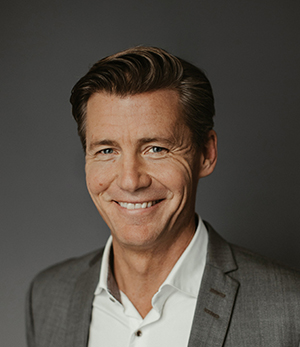
Andreas Ryve Lund
Improving Mathematics Teaching at Scale: Effects of Professional Development and Research-Based Curriculum Materials on Teaching and Student Learning
Andreas Ryve Lund is Professor of Mathematics Education at Mälardalen University. His research examines how educational systems can support the improvement of mathematics teaching at scale. Working closely with municipalities, schools, and teachers, his research group develops and studies professional development programmes and research-based curriculum materials designed to support high-quality mathematics instruction. Drawing on findings from several studies, including a quasi-experimental study, his keynote examines the impact of these interventions on both classroom teaching and students’ mathematical achievement.
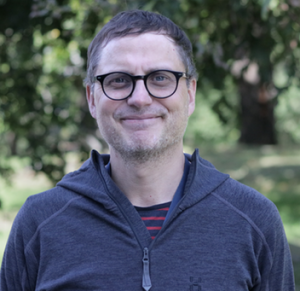
Johan Sandahl
Whose responsibility is it? Rethinking democratic citizenship education in and across subject teaching
Democracy and citizenship education have long been seen as a task predominantly assigned to social science education and social studies. But climate change, misinformation, and social inequality do not respect subject boundaries. This keynote argues that all school subjects carry a shared responsibility for educating tomorrow’s citizens, and suggests a common framework that can help bridge disciplinary boundaries.
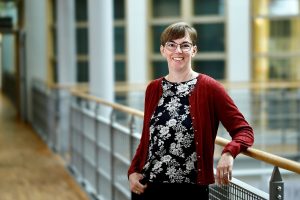
Johan Sandahl is Professor of Social Science Education at the Department of Teaching and Learning, Stockholm University. His research focuses on social science education, geography education, citizenship education, and the role of teaching in supporting pupils’ democratic formation and critical citizenship. He has been active as a teacher and in teacher education for many years and serves as Assistant Head of Department with responsibility for doctoral education. Sandahl is currently PI for the project “Critical citizenship: Trust and democracy in Social Science Education on theoretical and vocational tracks.
Karin Stolpe
When Information Is Easy to Access but Difficult to Judge: Why Science Education Matters for Professional Judgment and Democratic Responsibility in the Age of AI
In a time when information is easy to access but increasingly difficult to judge, the democratic responsibility of subject education becomes more urgent. Generative AI intensifies this condition by producing fluent and seemingly credible responses to complex questions, but the deeper educational challenge concerns how teachers and students evaluate knowledge, evidence, and expertise. Drawing on science education as a case, this keynote explores why disciplinary knowledge remains essential, while also arguing that it is no longer sufficient to understand research-based teaching primarily as a matter of staying updated within the discipline.
Karin Stolpe is Associate Professor at the Department of Behavioural Sciences and Learning, Linköping University, where she is affiliated with the Division of Learning, Aesthetics, Natural Science. Her research is situated in science and technology education, with a particular focus on biology education, programming education, assessment, and students’ meaning-making in teaching and learning processes. Her work contributes to understanding how complex scientific and technological knowledge can be made accessible, meaningful, and assessable in education.
Contact:
Academic Conferences - the conference administration office
Phone: +46 18 67 2219
or +46 18 671003
Email: nofa11@akademikonferens.se
Important dates:
Submission opening: October 1, 2026
Deadline for abstract submission: January 15, 2027
Conference: April 14-16, 2027
Organized by:
Uppsala University